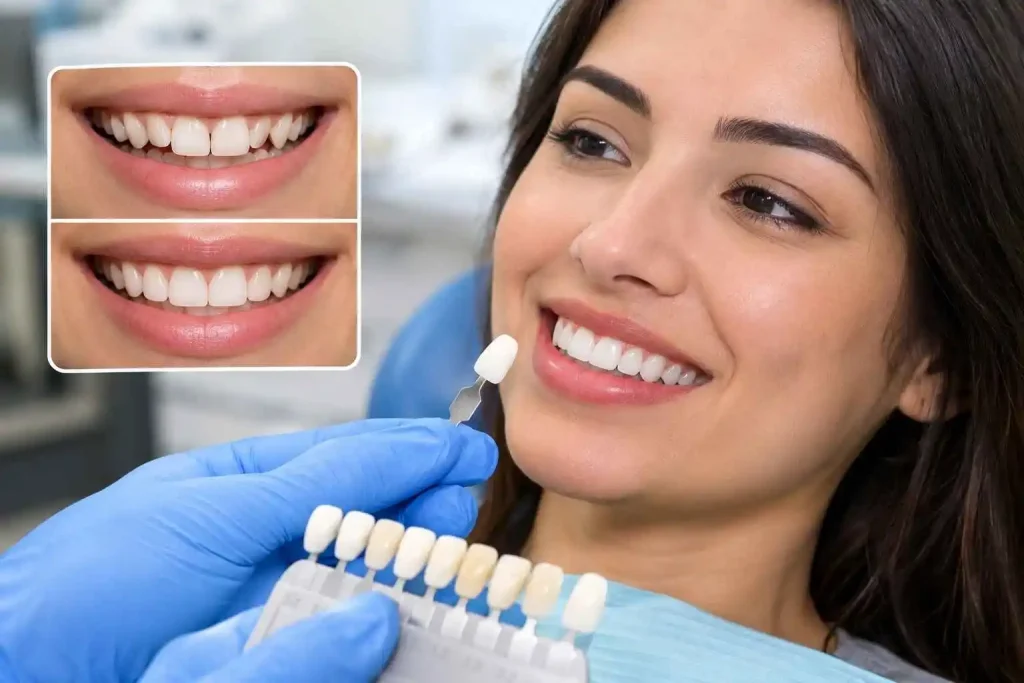
Many people want a straighter smile without spending months in braces, so it is natural to wonder: can dental veneers fix crooked teeth? In some cases, yes but only cosmetically. Veneers can make mildly crooked, uneven, or slightly rotated teeth look straighter by changing their shape and appearance. They do not actually move the teeth into a new position.
Whether veneers are suitable depends on how severe the misalignment is, along with your bite, tooth structure, and overall oral health. If teeth are heavily crowded, rotated, or causing bite problems, braces or clear aligners may be a better choice because they can gradually move teeth into proper alignment.
Can Veneers Straighten Crooked Teeth
Dental veneers can improve the appearance of mildly crooked, uneven, or slightly misaligned teeth by creating a straighter, more uniform smile. However, veneers do not physically move teeth or correct their underlying position. For moderate to severe misalignment, crowding, or bite problems, orthodontic treatment such as braces or clear aligners is generally recommended first. A dentist can assess your teeth and recommend the most suitable approach.
What Are Dental Veneers?
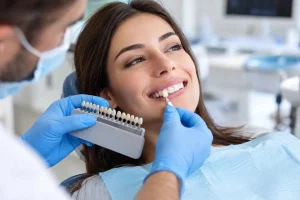
Dental veneers are thin, custom-made shells, usually made from porcelain or composite resin, that are bonded to the front surface of teeth. They can improve the appearance of tooth shape, colour, size, and minor surface unevenness, creating a more balanced smile. Veneers are a cosmetic dental treatment, so they change how teeth look rather than moving teeth or correcting their underlying position.
When Veneers Can Work for Crooked Teeth
Veneers may be suitable when crookedness is mild and mainly affects the appearance of the smile rather than tooth position or bite. Common examples include:
- Slightly overlapping front teeth: Minor overlap may sometimes be improved by carefully shaping the veneers for a more even appearance.
- Small gaps between teeth: Veneers can close minor spaces and create a more uniform smile.
- Uneven tooth length or shape: Veneers can balance teeth that look crooked because they differ in size, length, or shape.
- One tooth slightly out of line: A single mildly misaligned tooth may sometimes be visually balanced with neighbouring teeth using a custom veneer.
Even in these mild cases, some enamel removal is typically needed to prepare the tooth for veneer placement.
When You Need Braces or Clear Aligners Instead
For more significant misalignment, braces or clear aligners may be a better choice than veneers because they address tooth position, bite, and oral health rather than only changing how teeth look.
Bite and Functional Concerns
Significant misalignment can affect how the upper and lower teeth meet, known as occlusion. An uneven bite may contribute to excessive tooth wear, jaw discomfort, or added pressure during chewing. If veneers are placed on teeth that still have a major bite problem, that extra force can increase stress on the restorations and raise the risk of chipping or damage over time.
Preserving Natural Tooth Structure
When teeth are badly crooked, creating a straight-looking smile with veneers alone may require more reshaping of healthy tooth structure. This can mean removing more enamel than would be necessary for mildly uneven teeth. Straightening the teeth first with braces or clear aligners can improve their position and often allows for more conservative veneer preparation later, if cosmetic treatment is still needed.
Long-Term Oral Health
Crowded or overlapping teeth can create areas that are difficult to reach with a toothbrush or floss. Plaque can build up in these spaces, increasing the risk of tooth decay and gum disease. Orthodontic treatment helps address the underlying tooth alignment, making teeth easier to clean and maintain. Veneers can improve appearance, but they do not correct the crowding that causes these cleaning challenges.
Veneers vs. Braces vs. Clear Aligners: What’s the Difference?
Treatment | Purpose, Tooth Movement & Typical Use |
Veneers | Improve tooth appearance without moving teeth. Best for mild cosmetic imperfections such as slight unevenness, small gaps, or minor shape concerns. |
Traditional Braces | Correct tooth alignment and bite by gradually moving teeth. Suitable for mild to complex orthodontic problems, including significant crowding or bite issues. |
Clear Aligners | Gradually move teeth into better positions without traditional brackets. Suitable for many mild-to-moderate alignment problems, depending on the case. |
Dental Bonding | Reshape the visible appearance of teeth without moving them. Best for small chips, minor gaps, and tooth shape concerns. |
The Science Behind Why Veneers Can’t Move Teeth
Each tooth is held in the jawbone by the periodontal ligament, a network of fibres that connects the tooth root with the surrounding bone. With braces or clear aligners, controlled orthodontic force stimulates gradual bone remodeling around the root, allowing the tooth to move into a new position over time. Veneers work differently. They cover the visible crown of the tooth and can change its shape and appearance, but they do not move the root or alter its relationship with the surrounding bone. That is why veneers improve appearance, not true tooth alignment.
Can Veneers Fix Crooked Teeth at Home?
At-home or “press-on” veneer products sold online are not the same as professional dental veneers. They are not custom-fitted and do not involve a clinical assessment of your teeth, bite, or alignment. Wearing them regularly may also create spaces where bacteria collect around the teeth or gums. If you are considering veneers for crooked teeth, a professional dental evaluation is the safest way to determine whether they are suitable for you.
Can Veneers and Orthodontics Be Combined?
Sometimes, the best approach is to combine orthodontic treatment with veneers. Braces or clear aligners can first correct the underlying tooth alignment, creating a better foundation for cosmetic treatment. Once the teeth are properly positioned, veneers can refine their shape, shade, or length for a more balanced smile. This approach can preserve more natural tooth structure than using veneers alone on significantly crooked teeth. Modern clear aligners can also make this staged treatment more convenient for many adults.
What Teeth Are Not Suitable for Veneers?
Not every crooked or damaged tooth is a good candidate for veneers. A dentist should assess the tooth’s alignment, bite, enamel, and overall oral health before recommending cosmetic treatment.
- Severely crooked or rotated teeth: Significant misalignment may require braces or clear aligners first.
- Significant bite problems: Overbite, underbite, or crossbite may need orthodontic correction rather than veneers.
- Insufficient enamel or active dental disease: Extensive enamel loss, tooth decay, or gum disease should be addressed before veneers.
- Teeth needing structural repair: Large fractures or severely weakened teeth may need restorative treatment, such as a crown, rather than cosmetic coverage.
Which Teeth Are the Hardest to Straighten?
Severely rotated teeth, impacted teeth, or teeth that have only partially erupted can be among the most difficult and time-consuming to move with orthodontic treatment. Teeth affected by significant bone loss may also require extra care because reduced supporting bone can limit movement. The level of difficulty varies from person to person, so a dentist or orthodontist should assess the teeth, roots, bone support, and overall alignment during a clinical examination.
What Is the Cheapest Way to Fix Crooked Teeth?
Traditional braces or clear aligners are generally more cost-effective than a full set of veneers when the goal is to correct true tooth misalignment. Veneers are usually priced per tooth and are primarily a cosmetic treatment, so treating several teeth can become more expensive. However, the most affordable suitable option depends on your alignment, oral health, treatment goals, and individual dental assessment.
Questions to Ask Before Choosing Veneers for Crooked Teeth
- How crooked are they? Ask your dentist to explain the degree of misalignment and whether it is mainly a cosmetic concern or a structural one.
- Is my bite healthy? Find out whether your upper and lower teeth meet properly or if a bite problem needs orthodontic treatment first.
- Would braces work better? Ask whether braces or clear aligners could provide a better long-term result before choosing veneers.
- How much enamel? Discuss how much natural tooth structure would need to be prepared for veneer placement.
- What will I look like? Ask for a realistic preview of the expected smile, including changes to tooth shape, length, colour, and overall balance.
Why Choose BSRV Dental Office for Veneers and Smile Alignment
Choosing the right cosmetic treatment starts with a careful assessment of your teeth, bite, oral health, and smile goals.
- Thorough Clinical Assessment: BSRV Dental Office evaluates your teeth, alignment, bite, enamel, and overall oral health before recommending veneers or other treatment.
- Experienced Cosmetic Team: Our dental team takes a detailed approach to cosmetic dentistry, focusing on natural-looking results that suit your smile.
- Honest Treatment Guidance: We explain the differences between veneers, braces, and clear aligners so you can choose an option that fits your long-term needs.
- Convenient Scarborough Care: Located in Scarborough, BSRV Dental Office makes it convenient for local patients to discuss cosmetic dentistry and smile alignment options.
Frequently Asked Questions
Can veneers straighten severely crooked teeth?
Generally, no. Veneers can improve the appearance of mildly crooked teeth, but they do not physically move teeth into better positions. For severe misalignment, braces or clear aligners are usually more appropriate, and BSRV Dental Office can assess which option best suits your teeth and bite.
Is it better to get braces before veneers?
Often, yes. Straightening teeth first can create a better foundation for veneers and may allow for more conservative tooth preparation. Your dentist can determine whether orthodontic treatment is needed before cosmetic treatment.
Do veneers damage your natural teeth?
Veneers require preparation of the natural tooth, which may involve removing a small amount of enamel, making the process irreversible. At BSRV Dental Office, the goal is to keep preparation as conservative as possible while achieving a suitable cosmetic result.
Can adults get braces to straighten teeth before veneers?
Yes, adults can have orthodontic treatment before veneers. Traditional braces and discreet clear aligners can both move teeth, depending on the alignment problem, making them useful options before cosmetic treatment.
How long do veneers last?
Porcelain veneers typically last around 10–15 years with proper care, while composite veneers often last around 5–7 years. Their lifespan can vary based on oral hygiene, biting forces, teeth grinding, and regular dental care.
Which is better, braces or veneers, for crooked teeth?
Neither is universally better because they serve different purposes. Braces and clear aligners physically move teeth and correct alignment, while veneers mainly improve appearance, so the right choice depends on the degree of crookedness and your treatment goals.
Conclusion
Dental veneers can make mildly crooked, uneven, or slightly rotated teeth look straighter, but they cannot correct the underlying tooth position. More significant crowding, rotation, or bite problems usually require orthodontic treatment such as braces or clear aligners. In some cases, veneers may be placed afterward to refine tooth shape and create a more balanced smile. If you are unsure which option suits you, book a consultation with BSRV Dental Office in Scarborough.