
Dental Bridges in Scarborough, ON
Dental Bridges Scarborough
Replace Missing Teeth With a Fixed, Natural-Looking Bridge
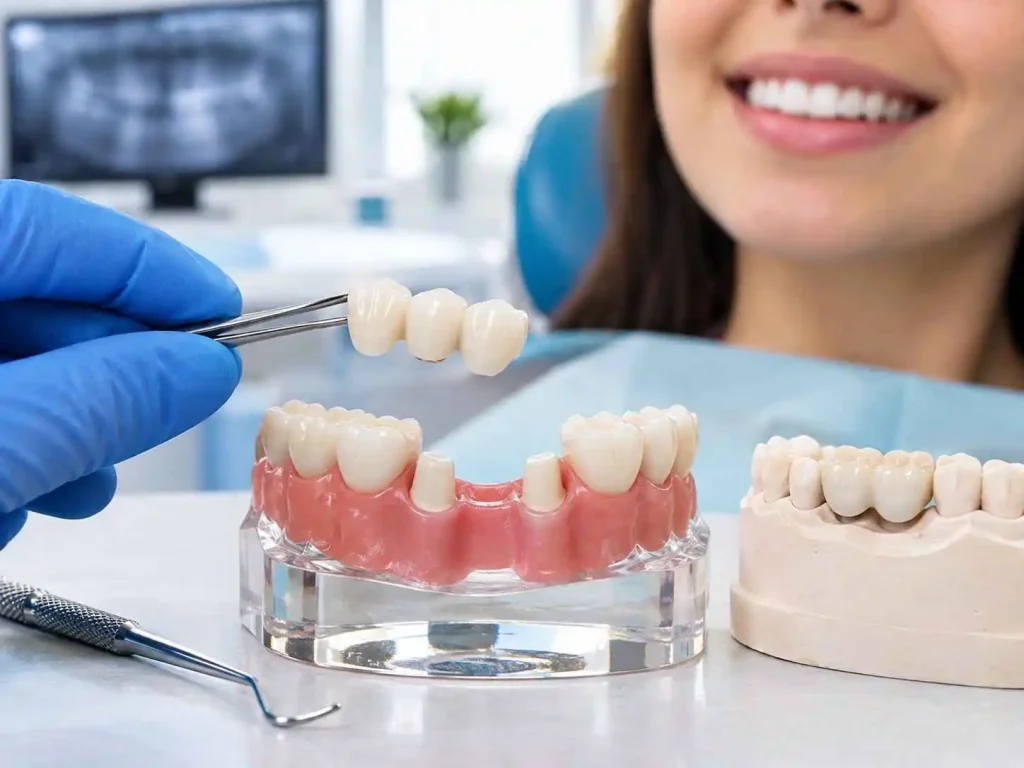
A dental bridge is a fixed prosthetic that fills the gap left by one or more missing teeth, using crowns on neighbouring teeth or dental implants for support. The replacement tooth in the middle is called a pontic, while the supporting teeth are known as abutment teeth.
A missing-tooth gap can affect more than your smile. Nearby teeth may shift into the space, chewing can become less comfortable, speech may be affected, and changes in your bite can develop over time.
At BSRV Dental Office, Our dentist starts dental bridge treatment with an examination of the missing tooth area, supporting teeth, gums, and bite. Depending on your situation, the dental team may use X-rays, impressions, or digital scans to plan a fixed partial denture that fits comfortably and works naturally with your surrounding teeth.
Benefits of Dental Bridges
A dental bridge can restore everyday function while helping maintain the position of your remaining teeth. It can also make chewing and speaking easier while filling the gap in your smile.
Restores Bite and Chewing Function
A bridge fills the gap with a replacement tooth, helping distribute biting and chewing forces more normally. This can make eating and speaking more comfortable.
Prevents Nearby Teeth Shifting
When a tooth is missing, nearby teeth can gradually move into the open space. This may affect alignment, bite balance, and in some cases contribute to jaw strain or TMJ-related discomfort.
Supports Better Long-Term Oral Function
Replacing a missing tooth helps maintain the spacing and function of your remaining teeth. A traditional bridge does not directly stimulate the jawbone beneath the missing tooth, unlike an implant. Your dentist can help you choose the option that suits your oral health and long-term needs.
Personalized Dental Bridges Treatment
Why Choose BSRV Dental Office for Dental Bridges
Dental bridge treatment starts by assessing your specific tooth gap and the teeth around it. Our dental team examines the neighbouring teeth, gums, remaining tooth structure, and bite to determine whether a bridge is suitable. X-rays may also be used to assess the supporting teeth and surrounding structures.
The type of bridge is selected based on the number and location of missing teeth, the condition of the abutment teeth, and your functional and cosmetic needs. Options may include traditional, cantilever, Maryland, or implant-supported bridges, with materials chosen based on strength, appearance, tooth location, and chewing forces.
Why Patients Trust BSRV Dental Office
- Thorough assessment of the gap, supporting teeth, gums, and bite.
- Personalized treatment planning based on your oral health and needs.
- Careful material selection for function, durability, and natural appearance.

What to Expect During Dental Bridge Treatment
Dental bridge treatment typically involves two main appointments, although the exact timeline depends on your treatment needs. The first visit focuses on preparing the supporting teeth and taking impressions or digital scans. The final appointment is used to fit, adjust, and securely place your custom bridge.
1
Exam and Prepare the Abutment Teeth
Your dentist examines the tooth gap, gums, bite, and abutment teeth. If natural teeth will support the bridge, a small amount of enamel may be removed to prepare them for the crowns.
2
Impressions and Temporary Bridge
Impressions or digital scans are taken so the permanent bridge can be custom-made. A temporary bridge may be placed to protect the prepared teeth and maintain function while your final restoration is being made.
3
Fit and Place the Final Bridge
At the next appointment, the permanent bridge is checked for fit, shape, and colour. Your dentist also checks bite alignment before securely cementing the bridge in place and making any needed adjustments.



Is Dental Bridges Treatment Right for You?
Who Is a Good Candidate for Dental Bridges?
Patients With Healthy Neighbouring Teeth
A traditional bridge can replace missing teeth when the neighbouring teeth are healthy and strong enough to serve as abutment teeth.
Patients With Existing Crowns or Large Fillings
Teeth that already have crowns or significant fillings may sometimes provide suitable support for a bridge, depending on their condition and strength.
Patients Who Prefer a Fixed Solution
A bridge stays in place and is not removed for daily use. It may be an option for patients who prefer a fixed tooth replacement instead of a removable partial denture.
Important Consideration
Healthy gums and adequate supporting structures are important for successful treatment. Gum disease or insufficient bone may need to be addressed first. If several teeth are missing, an implant-supported bridge may be considered depending on your oral health and treatment needs.
What is the cost of a dental bridge in Scarborough?
The cost of a dental bridge varies from patient to patient. Several factors can affect your total treatment cost, including:
- Bridge type: Traditional, cantilever, or implant-supported bridges have different treatment requirements.
- Material: Porcelain, zirconia, metal alloys, or combinations of materials can affect the cost.
- Number of missing teeth: Replacing one tooth may require different treatment than replacing several teeth.
- Condition of neighbouring teeth: Teeth supporting the bridge may need additional treatment before they can serve as abutments.
Dental insurance may cover part of the cost, depending on your plan and benefits. An accurate quote cannot be given without examining your teeth and understanding your treatment needs.
At BSRV Dental Office, you can receive a personalized cost estimate after your consultation and dental assessment.
Types of Dental Dental Bridges
Traditional Dental Bridge: A traditional bridge uses crowns placed on natural teeth on either side of the gap for support. It can replace one or more missing teeth, including molars, when the neighbouring abutment teeth are healthy and strong enough.
Cantilever Bridge: A cantilever bridge is anchored on only one side of the gap. It may be considered when there is only one suitable adjacent tooth available for support, although the tooth’s location and biting forces need to be considered.
Implant-Supported Bridge: An implant-supported bridge is anchored by dental implants rather than natural teeth. It may be considered when several teeth are missing, with suitability depending on factors such as gum health, available bone, and your overall oral condition.
Recovery and Aftercare
Recovery after dental bridge placement is typically quick. Most patients can return to their normal routine within a day or two. Mild soreness or gum tenderness around the treated area can occur during the first few days and usually settles as your mouth adjusts to the new restoration.
- Schedule regular checkups: Visit your dentist about every six months so the bridge, supporting teeth, and gums can be monitored.
- Maintain good oral hygiene: Brush and floss regularly, and take extra care to clean underneath the bridge where food debris and plaque can collect.
- Avoid hard or sticky foods: These can put excessive pressure on the bridge and may damage or loosen the restoration.
Everything You Need to Know
Frequently Asked Questions
What’s the difference between a bridge and a partial denture?
A dental bridge is a fixed restoration that stays in place, while a partial denture is removable. A bridge may be suitable when natural teeth or dental implants can provide stable support for the replacement tooth or teeth.
How long does getting a dental bridge take?
Treatment typically involves two main appointments when natural teeth are supporting the bridge. The first visit usually includes an examination, tooth preparation, and impressions or digital scans, while the final bridge is fitted at a later appointment.
What’s the difference between a bridge and a crown?
A dental crown covers and restores an existing damaged or weakened tooth, while a bridge replaces one or more missing teeth. A bridge uses supporting teeth or dental implants to hold the replacement tooth in the gap.
How long do dental bridges last?
A dental bridge can remain functional for many years, but its lifespan varies between patients. Oral hygiene, the health of the supporting teeth and gums, bite forces, bridge material, and habits such as teeth grinding can all affect its longevity.
Can a dental bridge be made of zirconia?
Yes, zirconia can be used for some dental bridges because it is a strong ceramic material with a tooth-coloured appearance. Whether zirconia is appropriate depends on factors such as the location of the missing teeth, chewing forces, bridge design, and your individual treatment needs.
Does getting a dental bridge hurt?
The supporting teeth are normally numbed with local anesthetic during preparation, so the procedure itself should be comfortable. Some sensitivity or gum tenderness can occur afterward, but ongoing pain or an uncomfortable bite should be checked by your dentist.
Testimonials
Trustindex verifies that the original source of the review is Google.
Clean dental office with high technology. Faster service. Highly recommend!!Posted on Google
 Melissa AitkenAmazing service. Saahil did an exceptional job and Aiman did a full cleaning with a lot of care. Highly recommend 10/10 service and professionalism.Posted on Google
 Manveer KullarI recently visited BSRV Dental for treatment and had an excellent experience from start to finish. Dr. Gopal was professional, patient, and clearly skilled — he took the time to explain everything and made sure I was comfortable throughout the procedure. The quality of the treatment was outstanding, and it’s obvious he genuinely cares about his patients’ wellbeing. The clinic itself is clean, modern, and welcoming, and the staff were friendly and efficient with scheduling. I left feeling confident in the care I received and would highly recommend BSRV Dental and Dr. Gopal to anyone looking for a trustworthy dentist.Posted on Google
 Saahil PatelFinding a dentist you actually trust is hard, but BSRV Dental made it easy. Dr. Gopal has a great chairside manner — he explains what’s happening every step of the way and never makes you feel rushed or like just another appointment. My treatment went smoothly and the results speak for themselves. Beyond the clinical side, the whole office runs like a well-oiled machine: easy to book, minimal wait times, and a genuinely friendly team from the front desk to the chair. It’s rare to find a clinic that combines real dental expertise with this level of care and attention. If you’re on the fence about where to go, BSRV Dental is worth it.Posted on Google
 Ankit ThakorAmazing dental clinic got my cleaning done today!Posted on Google
 Courtney SmithHad my teeth cleaning done today the hygienist was friendly and I forgot to ask her name since I was busy watching movie. Thanks for free Netflix !Posted on Google
 T. DClean dental office with high technology. Faster service. Highly recommend.Posted on Google
 Chuot Nhat
Ready to Reclaim Your Smile?
Replace missing teeth with dental bridges at BSRV Dental Office for better function and a natural-looking smile in Scarborough. Your confident smile starts with one visit.
Visit Our Scarborough Clinic
Our location
3430 Finch Ave E #6B, Scarborough, ON M1W 2R5, Canada
Contact Us
(416) 649-6388
bsrvdental@gmail.com
Our Clinic hours
Monday to Friday 9 AM to 7 PM
Saturday 9 AM to 5 PM
Sunday 10 AM to 4 PM