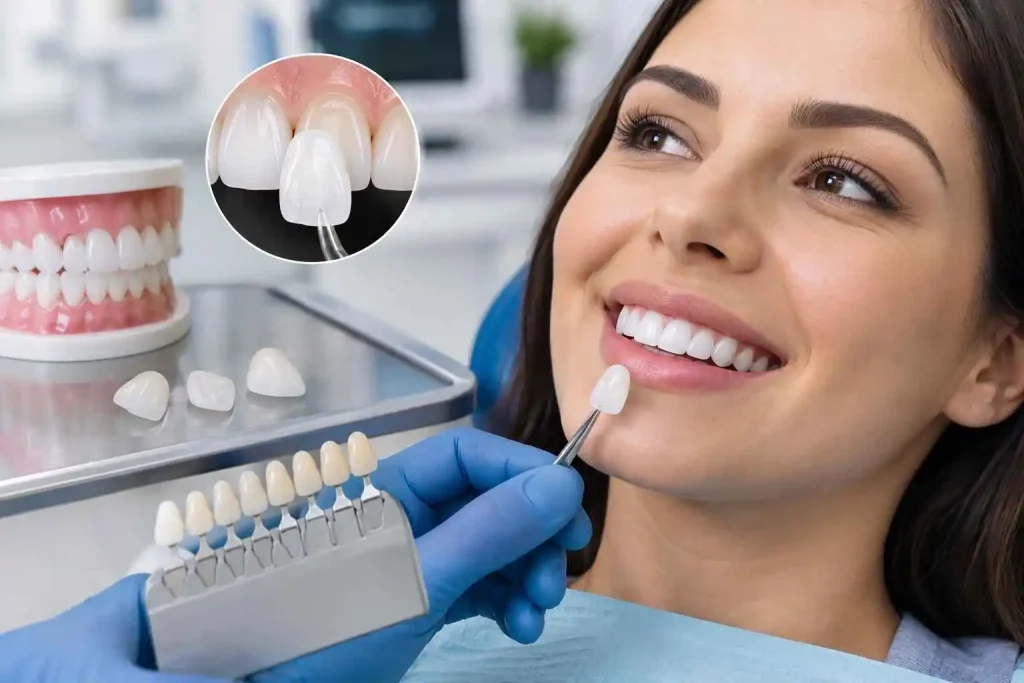
Dental veneers are thin, custom-made coverings placed over the front of teeth to improve their appearance. They can help hide discoloration, chips, small gaps, uneven shapes, and other cosmetic imperfections. Veneers are usually made from porcelain or composite resin, and each type works a little differently.
The treatment involves more than simply placing a covering on a tooth. A dentist first checks your teeth and gums, discusses your smile goals, and determines whether veneers are suitable. The process, veneer types, preparation, placement, and what to expect afterward all matter when considering treatment.
How Do Veneers Work?
Dental veneers work by covering the visible front surface of a tooth with a thin, custom-made shell. This masks cosmetic concerns such as stains, small chips, gaps, or uneven tooth shapes, improving the tooth’s appearance without changing the underlying issue. Because veneers are a cosmetic treatment, they do not repair problems such as tooth decay, infection, or gum disease. Those conditions should be treated before considering veneers.
What Can Veneers Fix?
Dental veneers can improve several visible cosmetic concerns by changing the color, shape, size, or appearance of teeth. They are often considered when these issues affect the look of your smile and other cosmetic options may not provide the desired result.
- Deeply discolored or stained teeth: Veneers can cover stains that do not respond well to professional teeth whitening.
- Chipped or cracked teeth: They can conceal minor chips and cosmetic cracks, creating a more even-looking tooth.
- Gaps between teeth: Veneers can close or reduce small spaces between selected teeth.
- Small or misshapen teeth: They can improve teeth that appear too small, uneven, or irregularly shaped.
- Mildly misaligned teeth: Veneers may make slightly uneven or mildly misaligned teeth appear straighter without orthodontic treatment.
Who Is a Candidate for Veneers?
Veneers may be a good option for people who want to improve the appearance of their smile, especially when concerns involve tooth color, shape, chips, or small gaps. However, your teeth and gums should be healthy before treatment begins. Cavities, gum disease, infections, or other unresolved dental problems need to be addressed first. In this way, veneers serve as a cosmetic finishing step, not a starting point for treating dental disease.
Types of Dental Veneers
Dental veneers come in several types, and the right choice depends on your teeth, oral health, cosmetic goals, and how much tooth preparation is appropriate. Porcelain and composite veneers differ in durability, appearance, cost, and how much tooth preparation they need. For a detailed side-by-side comparison, read our guide on porcelain vs composite veneers.
Porcelain Veneers
Porcelain veneers are custom-made ceramic shells designed to fit over the front of your teeth. Traditional porcelain veneers usually require some enamel removal before bonding, so the treatment is generally irreversible. They are known for their natural-looking translucency, strong stain resistance, and durability. With proper care, porcelain veneers can typically last around 10–15 years, although their lifespan varies with oral hygiene, bite forces, and daily habits.
Composite Veneers
Composite veneers use a tooth-colored resin that is shaped and sculpted directly onto the tooth, often during a single dental appointment. They usually require minimal or no enamel removal, depending on the case. Composite veneers are generally more affordable than porcelain and can provide an attractive cosmetic improvement. However, they typically do not last as long as porcelain and may be more prone to staining or wear. If chipped, composite can often be repaired chairside.
No-Prep or Minimal-Prep Veneers
No-prep and minimal-prep veneers are porcelain options designed to preserve more of the natural tooth structure than traditional veneers. However, “no-prep” does not always mean zero enamel removal; some cases still require minor preparation for proper fit and appearance. They are not suitable for every tooth or smile. A dentist needs to evaluate your enamel, tooth position, bite, and cosmetic goals before determining whether this approach is appropriate.
Removable (Snap-On) Veneers
Removable, or snap-on, veneers are non-permanent covers that fit over existing teeth and can be taken in and out, somewhat like a retainer. Unlike bonded porcelain or composite veneers, they do not permanently change the tooth surface. Depending on their design and fit, they may affect eating, pronunciation, or comfort. Because long-term research on these newer cosmetic options is limited, it is best to discuss their benefits and limitations with a dentist before choosing them.
Veneer Types at a Glance
Veneer Type | Key Details |
Porcelain Veneers | Some enamel removal; typically lasts 10–15 years |
Composite Veneers | Minimal or no enamel removal; typically lasts 5–7 years |
No-Prep/Minimal-Prep Veneers | Less enamel removal than traditional porcelain, but some may still be needed; typically lasts 5–10 years |
Removable/Snap-On Veneers | No enamel removal; not intended as a long-term permanent solution |
Lifespan varies depending on the material, oral hygiene, bite, daily habits, and professional dental care.
Veneers vs. Crowns: What’s the Difference?
Dental veneers and crowns serve different purposes. Dental veneers cover only the visible front surface of a tooth and are mainly used to improve cosmetic concerns such as color, shape, or minor imperfections. Crowns, on the other hand, cover the entire tooth and are primarily used to restore teeth weakened by decay, large fillings, or trauma. A crown can also improve appearance, but restoring the tooth’s strength and function is usually the main goal.
The Veneer Process: Step by Step
Getting dental veneers usually involves several steps, from planning your new smile to making sure your bite feels comfortable after placement. Here’s what you can generally expect:
- Consultation & Planning — Your dentist discusses your smile goals, examines your teeth and gums, and checks whether veneers are suitable for you.
- Tooth Preparation — For traditional porcelain veneers, a small amount of enamel may be removed to create space for the veneer. Composite veneers typically require minimal or no enamel removal.
- Impressions & Fabrication — Impressions or digital scans are taken and sent to a dental laboratory, where custom porcelain veneers are made. Temporary veneers may be provided if needed while you wait.
- Final Fitting & Bonding — At the placement appointment, your dentist checks the veneers for fit, shape, and color before bonding them permanently to your teeth.
- Bite Check & Adjustments — Your dentist checks how your teeth come together and makes any necessary adjustments so the veneers feel comfortable and function properly.
Caring for Your Veneers
With the right daily care, you can help protect your veneers and the natural teeth underneath them. A few simple habits can also help maintain their appearance and support good oral health.
- Brush Gently Twice — Brush twice a day with a soft-bristled toothbrush and non-abrasive fluoride toothpaste to clean your teeth without unnecessary wear.
- Floss Every Day — Floss daily around your teeth and along the gumline to remove plaque and food particles that brushing cannot reach.
- Protect Against Hard Foods — Avoid biting directly into hard foods such as whole apples, carrots, or tough meats. Cut them into smaller pieces instead.
- Limit Dark Stains — Limit coffee, tea, red wine, and other dark-colored foods and drinks. This is especially helpful for composite veneers, which can stain more easily.
- Keep Dental Visits — Continue with regular dental checkups and professional cleanings so your dentist can monitor your veneers, gums, and natural teeth.
Are Veneers Permanent? Do They Damage Your Teeth?
Most traditional porcelain and composite veneers are considered permanent because placing them may involve removing some tooth enamel, and enamel does not grow back. No-prep and removable veneers are exceptions, depending on the treatment. Veneers themselves do not cause tooth damage when properly placed and cared for. However, the natural tooth underneath can still develop decay if you skip brushing, flossing, or regular dental checkups, so good oral hygiene remains essential.
Benefits and Drawbacks of Veneers
Veneers can make a noticeable difference in the appearance of your smile, but they are not the right choice for everyone. Understanding both the benefits and drawbacks can help you have a more informed conversation with your dentist.
Benefits
- Improved Smile Appearance — Veneers can dramatically improve the color, shape, size, and overall appearance of teeth with cosmetic imperfections.
- Natural-Looking Results — Well-designed veneers can blend naturally with the surrounding teeth, especially porcelain veneers, which have a lifelike translucency.
- Stain Resistance — Porcelain is highly resistant to staining and can be more stain-resistant than natural tooth enamel, although good oral hygiene still matters.
- Long-Lasting Results — With proper care and regular dental visits, veneers can provide cosmetic results for many years.
- Simple Daily Care — Veneers do not require a special maintenance routine. Regular brushing, flossing, dental checkups, and cleanings remain the foundation of good care.
Drawbacks
- Some Enamel Removal — Traditional veneers may require removing a small amount of natural enamel to create space for the restoration.
- Mostly Irreversible — Once enamel has been removed, it does not grow back, so traditional veneer treatment is generally considered irreversible.
- Possible Sensitivity — Some people experience temporary sensitivity to hot or cold after veneer preparation and placement.
- Usually Cosmetic — Dental insurance typically does not cover veneers because they are considered a cosmetic treatment, although coverage policies can vary.
Why Choose BSRV Dental Office for Veneers in Scarborough
Choosing veneers is a personal decision, so the treatment should be planned around your dental health, smile goals, and the result you want to achieve.
- Experienced Cosmetic Team — Our dental team has experience with cosmetic dentistry and can help you understand whether veneers are a suitable option for your smile.
- Porcelain & Composite Options — We offer both porcelain and composite veneers, allowing treatment to be considered based on your needs, preferences, and dental situation.
- Personalized Smile Planning — Your treatment plan is tailored to your goals, including the desired tooth color, shape, size, and overall smile appearance.
- Convenient Scarborough Location — BSRV Dental Office provides accessible dental care for patients in Scarborough, making consultations, veneer treatment, and follow-up visits convenient.
Frequently Asked Questions
How Long Do Veneers Take to Get?
Porcelain veneers typically take two appointments spread over a few weeks, allowing time for custom fabrication between visits. Composite veneers can often be completed in a single appointment, depending on the number of teeth and your treatment plan.
Do Veneers Hurt to Get?
Getting veneers is generally comfortable, and local anesthetic can be used during tooth preparation when needed. Some patients may experience mild sensitivity to hot or cold for a short time afterward, particularly after enamel preparation.
Can Veneers Be Whitened?
No, dental veneers do not respond to teeth-whitening treatments like natural tooth enamel does. Your dentist will help you choose the veneer shade before placement, so whitening natural teeth beforehand may be considered if you want a consistent smile color.
How Many Veneers Do Most People Get?
The number of veneers varies depending on your smile goals and which teeth you want to improve. Some people need just one veneer for a single tooth, while others choose a set covering six to eight visible front teeth.
What Happens If a Veneer Chips or Falls Off?
If a veneer chips or comes loose, contact your dental office promptly rather than trying to fix it yourself. Composite veneers can often be repaired chairside, while a damaged porcelain veneer may need to be replaced; BSRV Dental Office can assess the tooth and recommend the appropriate next step.
Are Veneers Worth It?
Whether veneers are worthwhile depends on your cosmetic goals, budget, expectations, and the health of your teeth and gums. At BSRV Dental Office, an evaluation can help determine whether veneers are appropriate for your smile and whether the expected benefits justify the treatment.
Conclusion
Dental veneers can be a versatile cosmetic option for improving concerns such as stains, chips, gaps, and uneven tooth shapes. Porcelain and composite veneers each have their own benefits, so the right choice depends on your smile goals, budget, and treatment timeline. If you’re considering veneers, book a consultation with BSRV Dental Office in Scarborough to discuss your options and find out whether veneers are the right fit for you.