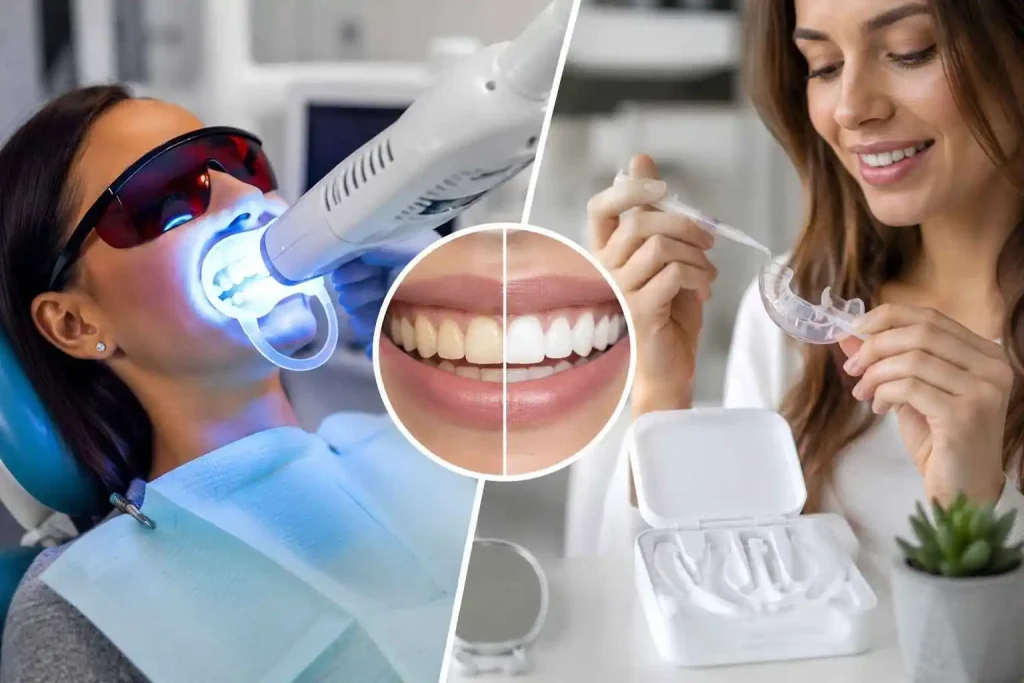
Professional teeth whitening generally uses a higher concentration of peroxide under a dentist’s supervision, while many at-home kits use lower concentrations for gradual whitening. Professional treatments may use around 25–40% peroxide, whereas at-home products commonly range from about 3–14%, depending on the product and formulation. This difference can affect how quickly and effectively stains are removed.
Both options can brighten your smile, but they differ in treatment time, supervision, sensitivity, convenience, and expected results. Professional whitening offers a more controlled and customized approach, while at-home whitening kits can be convenient for people who prefer gradual results at home.
What's the Real Difference Between Professional Whitening and At-Home Kits?
The main difference between professional teeth whitening and at-home kits is the strength and type of whitening formula, how precisely the product is applied, and whether a dentist supervises the treatment. Professional whitening typically uses controlled, dentist-approved bleaching agents and customized application methods, while most store-bought kits are self-administered and designed for general use.
- Peroxide concentration difference: Professional treatments may use higher or more carefully controlled concentrations of hydrogen peroxide or carbamide peroxide, while at-home products generally use lower-strength formulas and take longer to produce visible results.
- Custom vs. generic fit: Dentist-provided whitening trays are custom-made to fit your teeth and can help distribute whitening gel more evenly. Store-bought trays and strips are designed to fit a wide range of users and may provide less precise coverage.
- Professional oversight vs. self-administered: Professional whitening is monitored by a dental professional who can assess your teeth, gums, and sensitivity. At-home kits require you to apply the product yourself and carefully follow the instructions.
Types of At-Home Whitening Kits
- Dentist-Provided Take-Home Trays: Custom-fit trays designed for your teeth and used with professional-strength whitening gel. They offer more precise coverage and professional guidance while allowing you to whiten at home.
- Store-Bought Whitening Strips: An affordable and convenient option with a generic fit. The strips can gradually whiten visible tooth surfaces but may not cover every area evenly.
- Whitening Pens & Gels: Designed for targeted application and quick touch-ups. They are generally mild and convenient for maintaining results, but may produce less dramatic whitening.
- LED Light Whitening Kits: These kits use a whitening gel with an LED light and are heavily marketed for faster results. However, evidence that the light itself significantly improves whitening is mixed.
What Happens During a Professional In-Office Whitening Appointment?
- Dental exam and candidacy check: Your dentist examines your teeth and gums to confirm that whitening is suitable and to identify issues such as cavities, gum disease, existing restorations, or significant sensitivity.
- Gum protection barrier applied: A protective barrier is placed around the gums and other soft tissues to help prevent contact with the whitening gel.
- Whitening gel applied: A professional-strength whitening gel, often containing hydrogen peroxide in concentrations of approximately 25% to 40%, is carefully applied to the tooth surfaces.
- Gel cycles completed: The gel may be left on the teeth for 15 to 20 minutes per cycle, with the application repeated for two or three rounds depending on the whitening system and your dentist’s treatment plan.
- Optional light or laser activation: Some whitening systems use a specialized light or laser as part of the treatment. The benefits depend on the specific system, and the whitening gel remains the primary bleaching agent.
- Gel removed and shade evaluated: After treatment, the gel is removed and your tooth shade is evaluated to assess the improvement and discuss any recommended aftercare or touch-up treatment.
Professional vs At-Home: Side-by-Side Comparison
In-Office Professional Whitening
Factor | Details |
Peroxide concentration | 25–40% hydrogen peroxide |
Time to results | Same day |
Shade improvement | 2–8 shades |
Session duration | 30–60 minutes, usually 1 visit |
Result longevity | 6 months–2 years |
Supervision | Full dentist supervision |
Dentist Take-Home Trays
Factor | Details |
Peroxide concentration | 10–22% carbamide peroxide |
Time to results | Visible results in 3–5 days; full results in 1–2 weeks |
Shade improvement | 2–6 shades |
Session duration | 30–60 minutes per day for 1–2 weeks |
Result longevity | 6 months–1 year |
Supervision | Dentist-prescribed treatment |
OTC Whitening Strips and Kits
Factor | Details |
Peroxide concentration | 3–14% hydrogen peroxide |
Time to results | Visible results in 1–2 weeks; full results in 2–4 weeks |
Shade improvement | 1–3 shades |
Session duration | 5–30 minutes per day for 2–4 weeks |
Result longevity | 3–6 months |
Supervision | No professional oversight |
Professional in-office whitening generally offers the fastest and most controlled results. Dentist-provided take-home trays provide a balance between professional guidance and at-home convenience, while OTC strips and kits are usually the most affordable but may deliver more gradual and limited results.
Which Stains Respond Best to Whitening?
- Yellow stains: Usually respond best to teeth whitening. Common causes include coffee, tea, tobacco, and age-related changes in tooth color.
- Brown stains: May respond moderately to whitening, depending on how deep the discoloration is and what caused it.
- Gray stains: Often respond poorly to conventional whitening, particularly when caused by tetracycline or certain medications. In severe cases, veneers or other cosmetic treatments may be considered.
Cost Comparison Is Professional Whitening Worth the Price?
Professional teeth whitening usually has a higher upfront cost because the treatment is performed in a dental office using professional-grade products and controlled application. At-home options are generally more affordable initially, but repeated treatments, replacement kits, and maintenance products can increase the overall cost over time. The best value depends on your budget, desired results, treatment speed, and how much professional supervision you prefer.
Method | Typical Cost |
In-office professional | Higher upfront cost, usually for a single visit |
Dentist take-home trays | Mid-range cost with professional guidance |
OTC strips/kits | Lowest upfront cost, but repeat purchases can add up |
Safety, Sensitivity & Risks
- Tooth sensitivity: Temporary sensitivity is one of the most common side effects of teeth whitening and usually improves within 24–48 hours after treatment.
- Gum irritation: Whitening gel can irritate the gums if it comes into contact with soft tissue, especially when using poorly fitting or generic trays.
- Enamel wear from overuse: Following the recommended treatment time is important. Excessive or repeated use of whitening products may increase the risk of enamel irritation or damage.
- Untreated cavities or gum disease: Whitening may cause discomfort or irritation when cavities, gum disease, exposed tooth roots, or other oral health problems are present. These issues should be evaluated before whitening.
- Professional screening reduces risk: A dental professional can check your teeth and gums before treatment and recommend an appropriate whitening method, reducing the risks associated with unsupervised use.
How Long Do Results Last and How to Maintain Them?
The longevity of teeth whitening results varies by treatment type, oral hygiene, diet, and staining habits. Professional whitening can provide longer-lasting results, while at-home kits usually require more frequent maintenance. With proper aftercare, touch-ups can help extend your brighter smile.
- Avoid staining foods and drinks for the first 48 hours: Limit coffee, tea, red wine, dark sauces, and other highly pigmented foods immediately after whitening.
- Brush twice daily and floss: Good oral hygiene helps remove plaque and surface stains that can make teeth appear darker over time.
- Use whitening toothpaste for maintenance: Whitening toothpaste can help control surface stains, but it should be used for maintenance rather than as your primary whitening treatment.
- Consider touch-ups every 6–12 months: Periodic touch-up treatments can help maintain your preferred tooth shade, depending on your whitening method and dentist’s recommendations.
Who Should Choose Which Option?
Choose Professional Whitening If:
- You have deep or long-standing stains: Professional treatment may be more suitable for noticeable or stubborn discoloration that does not respond well to basic at-home products.
- You have an upcoming event or deadline: In-office whitening can provide visible results quickly when you want a brighter smile before a wedding, celebration, or other special occasion.
- You need guidance for sensitive teeth: A dentist can evaluate your sensitivity and recommend a whitening approach that is more appropriate for your needs.
- You have existing restorations: Crowns, veneers, fillings, or bonding do not whiten like natural teeth, so a dentist can assess your smile and help plan treatment appropriately.
Choose At-Home Kits If:
- You have mild surface staining: At-home whitening can be a convenient option for gradual improvement of common surface stains.
- You are budget-conscious: Store-bought whitening strips and kits generally have a lower upfront cost than professional in-office treatment.
- You need maintenance between professional visits: At-home products can be useful for occasional touch-ups and maintaining your preferred shade after professional whitening.
Can You Combine Both Methods?
Yes. Combining professional and at-home whitening can provide a practical long-term strategy. An in-office whitening session can deliver a noticeable initial improvement, while custom take-home trays can help maintain the results with periodic touch-ups every 3–6 months, depending on your dentist’s recommendations and staining habits.
Frequently Asked Questions
Does teeth whitening damage enamel?
When used as directed, professional and at-home teeth whitening treatments are generally safe for enamel. Overuse or incorrect application can increase the risk of sensitivity and irritation.
Can you whiten teeth with crowns or veneers?
No. Whitening products only change the color of natural teeth. Crowns, veneers, fillings, and bonding do not respond to bleaching, so your dentist can recommend appropriate color-matching options.
How often can you safely whiten your teeth?
The recommended frequency depends on the whitening method, peroxide strength, and your oral health. Follow the product instructions or your dentist’s recommendations rather than repeatedly whitening without guidance.
Is whitening sensitivity permanent?
No, whitening sensitivity is usually temporary and often improves within 24–48 hours. If sensitivity continues or becomes severe, consult your dentist to identify the underlying cause.
Do LED whitening lights actually work?
LED lights are used with some whitening kits, but the peroxide-based whitening gel does most of the work. Evidence that LED light significantly improves whitening results is mixed.
Should you get a dental cleaning before whitening?
A dental cleaning can remove plaque and surface stains before whitening, helping create a cleaner starting point. Your dentist can also check for cavities, gum disease, or other issues before treatment.
Conclusion
Professional teeth whitening and at-home whitening kits can both help improve tooth color, but the right choice depends on your goals, budget, sensitivity, and preferred treatment time. In-office whitening may be ideal for faster, professionally supervised results, while take-home kits can offer greater convenience and gradual whitening. A dentist can also help determine whether your discoloration is suitable for whitening.
If you’re unsure which whitening option is right for your smile, consider booking a consultation with a dental professional. They can assess your teeth and gums, discuss your whitening goals, and recommend a safe, personalized treatment plan for achieving a brighter smile.