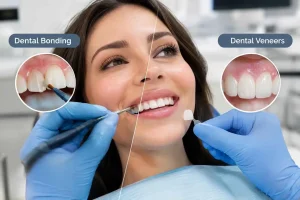
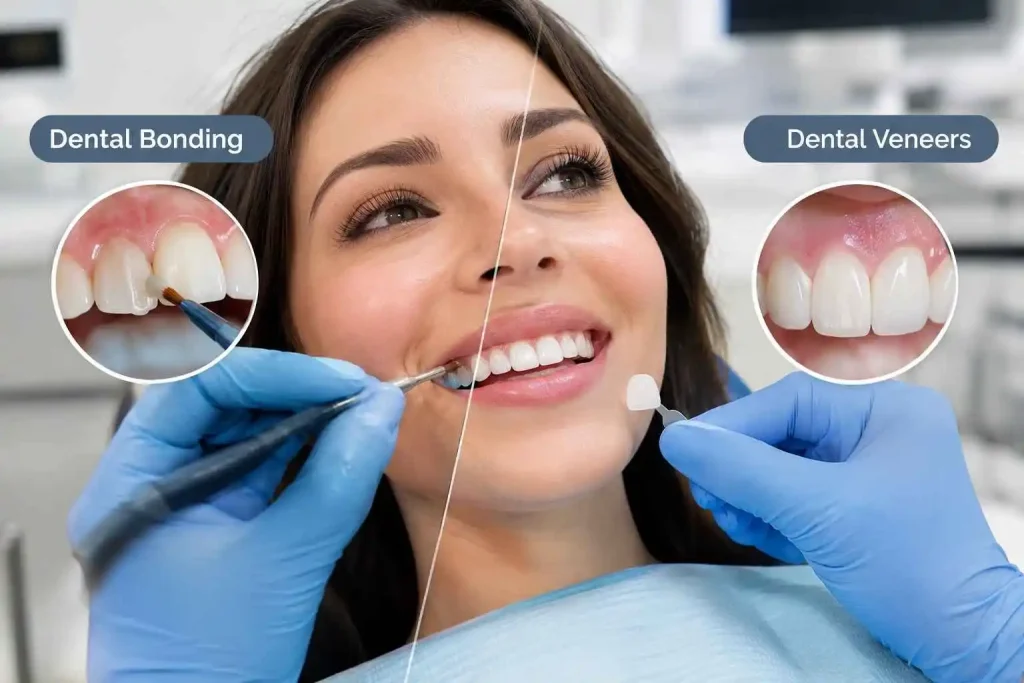
Dental bonding and dental veneers can both improve similar cosmetic concerns, such as chipped teeth, discoloration, gaps, and uneven tooth shapes. However, they are not the same treatment. The right choice depends on the type and extent of the imperfection, your budget, the condition of your teeth, and how permanent you want the result to be.
Dental bonding uses tooth-colored composite resin that is shaped directly onto the tooth, while dental veneers use a custom-made shell placed over the front surface. Bonding is generally more conservative, while veneers can provide a more extensive and durable cosmetic change.
What Is Dental Bonding?
Dental bonding is a cosmetic dental treatment that uses tooth-colored composite resin to improve the shape, appearance, or surface of a tooth. The dentist applies the resin directly to the tooth, carefully shapes it, and hardens it with a curing light. Because bonding usually requires little tooth preparation, treatment can often be completed in a single visit.
- Small chips and cracks: Restores minor damage and improves the tooth’s appearance.
- Small gaps: Helps close minor spaces between teeth.
- Minor discoloration: Covers certain stains or areas of uneven tooth color.
- Uneven or worn teeth: Can slightly reshape teeth and improve their overall contour.
What Are Dental Veneers?
Dental veneers are thin, custom-made shells placed over the front surface of teeth to improve their color, shape, and overall appearance. They can be made from porcelain or composite material. Traditional veneers usually require some enamel removal, with porcelain veneers generally needing more preparation. Porcelain veneers typically involve 2–3 visits for planning, preparation, fabrication, and placement.
- Moderate to severe discoloration: Covers stains that may not respond well to teeth whitening.
- Larger chips or damage: Restores the appearance of teeth with more noticeable cosmetic defects.
- Noticeable gaps: Can help improve spacing between front teeth.
- Misaligned or misshapen teeth: Changes tooth shape, size, and proportions for a more even-looking smile.
Dental Bonding vs. Veneers: Key Differences
Dental bonding and veneers can both improve the appearance of teeth, but they differ in preparation, longevity, appearance, reversibility, and cost. Here is how the two treatments compare.
Procedure and Number of Visits
Dental bonding is typically completed in one visit, with little to no enamel removal. The dentist applies, shapes, and cures composite resin directly on the tooth. Veneers usually require 2–3 visits, particularly porcelain veneers. The process may include a consultation, tooth preparation, impressions or digital scans, temporary veneers, and a laboratory fabrication period before the final veneers are bonded into place.
How Long Each One Lasts
Dental bonding typically lasts about 3–10 years, depending on the tooth, daily habits, oral hygiene, and care. Porcelain veneers can typically last 10–20 years with proper care, while composite veneers generally last around 5–7 years. Regular dental visits, avoiding habits such as biting hard objects, and protecting teeth from excessive grinding can help extend the useful life of either treatment.
Appearance and Stain Resistance
Veneers, particularly porcelain veneers, offer strong stain resistance and can closely mimic the translucency and light-reflecting qualities of natural enamel. Composite bonding can also produce a natural-looking result, but the resin is more likely to discolor or lose its polish over time. Whitening treatments do not whiten bonding material in the same way they whiten natural teeth, so existing bonding may need to be replaced to match a lighter shade.
Reversibility
Dental bonding is generally considered reversible because little to no natural enamel is removed during treatment. The composite resin can usually be adjusted, repaired, or removed without permanently changing the tooth structure. Traditional veneers are different: once enamel has been removed, the treatment is generally not reversible. This is especially important with porcelain veneers, which require careful tooth preparation before permanent placement.
Cost
Dental bonding is generally more affordable per tooth than veneers, making it a practical option for patients who need minor cosmetic improvements or have a smaller treatment budget. Veneers cost more because they may involve tooth preparation, detailed customization, laboratory fabrication, and multiple appointments. The total cost depends on the material, number of teeth being treated, and complexity of the smile changes planned.
Bonding vs. Veneers at a Glance
Factor | Comparison |
Visits Needed | Bonding: Usually 1 visit. Veneers: Usually 2–3 visits, especially for porcelain. |
Typical Lifespan | Bonding: 3–10 years. Veneers: 10–20 years for porcelain; 5–7 years for composite. |
Stain Resistance | Bonding: Lower; may discolor over time. Veneers: Higher, especially porcelain. |
Enamel Removal | Bonding: Little to none. Veneers: Some enamel removal; typically more with porcelain. |
Reversibility | Bonding: Generally reversible. Veneers: Generally not reversible once enamel is removed. |
Relative Cost | Bonding: Lower cost per tooth. Veneers: Higher cost per tooth. |
What Are the Downsides of Dental Bonding?
Dental bonding is a conservative and convenient cosmetic option, but it has limitations. Compared with veneers, composite bonding generally requires more maintenance over time and may not provide the same long-term stain resistance or durability.
- Less durable: Bonding generally does not last as long as porcelain veneers and may need touch-ups or replacement sooner.
- More prone to chipping: Composite resin can chip or wear, particularly with biting hard foods or habits such as nail biting.
- Can stain over time: Bonding is more susceptible to discoloration and may yellow or stain with coffee, tea, tobacco, and other staining substances.
- Cannot be whitened: Teeth whitening does not lighten existing composite bonding, so the shade remains the same unless the bonding is polished, repaired, or replaced.
Why Do Some Dentists Discourage Veneers?
Some dentists may discourage veneers when the treatment would remove healthy enamel without a clear clinical or cosmetic need. Veneers can provide excellent results, but they are a permanent commitment. A responsible dentist first considers the tooth’s health, the underlying concern, and whether a less invasive treatment could achieve the desired result.
- Permanent enamel removal: Traditional veneers require removing some enamel, so healthy tooth structure is permanently altered. If bonding or another conservative option can provide a suitable result, it may be considered first.
- Masking an underlying problem: Veneers should not be used simply to cover issues such as tooth decay, gum disease, or significant misalignment without addressing the underlying cause. Treating the dental problem comes first.
- A less invasive option may work: Some patients may choose veneers for minor chips, small gaps, or slight shape changes that could potentially be addressed with dental bonding. Treatment should be based on the condition of the teeth and the patient’s goals, not simply on choosing the more extensive procedure.
What Happens After 20 Years of Having Veneers?
Well-maintained porcelain veneers can last 20 years or longer, but they do not last indefinitely. After two decades, some patients may notice normal wear, minor staining around the margins, or small chips. Eventually, veneers may need replacement as they age or become damaged. During routine dental checkups, a dentist can examine the veneers, surrounding teeth, and gums and advise when replacement may be appropriate.
Who Should Choose Bonding?
Dental bonding may suit patients who want a conservative cosmetic improvement without extensive tooth preparation. It can be a practical choice when the concern is minor and the goal is a quicker, more flexible treatment.
- Minor chips, cracks, or gaps: Bonding can improve small cosmetic imperfections without extensive alteration of the tooth.
- Limited budget: Its lower cost per tooth can make bonding an option for patients with a tighter budget or without dental insurance coverage for cosmetic treatment.
- Quick results: Bonding is often completed in a single visit, which can be useful when you want a cosmetic improvement before an upcoming event.
- Prefer a reversible option: Because little to no enamel is usually removed, bonding offers a more conservative and generally reversible approach.
Who Should Choose Veneers?
Veneers may be suitable when a patient wants more comprehensive cosmetic changes or longer-lasting results. Candidacy depends on tooth and gum health, the desired outcome, and whether veneers are appropriate for the underlying concern.
- Moderate to severe discoloration or damage: Veneers can address significant staining, larger chips, or noticeable changes in tooth shape.
- Wanting longer-lasting results: Porcelain veneers can provide a longer-lasting cosmetic solution when properly cared for, although they require a higher initial investment.
- Multiple cosmetic concerns: Veneers can address several concerns at once, including tooth color, shape, size, spacing, and overall smile symmetry.
- Healthy teeth and gums: Candidates should generally have healthy teeth and gums without active decay or untreated gum disease before veneer treatment is co
Why Choose BSRV Dental Office for Bonding or Veneers
At BSRV Dental Office, we consider your oral health, cosmetic goals, and treatment preferences before recommending dental bonding or veneers.
- Experience with both treatments: Our dental team provides both dental bonding and veneer treatments, helping patients understand the practical differences between their options.
- Honest treatment guidance: We recommend the option that fits your individual case rather than automatically choosing a more extensive treatment.
- Personalized treatment planning: Your plan is based on your teeth, bite, oral health, desired appearance, and the type of cosmetic changes you want to make.
- Convenient Scarborough location: Our dental office serves patients in Scarborough with accessible cosmetic dental care for smile improvements close to home.
Frequently Asked Questions
Should I Get Veneers or Bonding?
There is no universal answer because the right choice depends on the severity of the cosmetic concern, your budget, and how long you want the result to last. At BSRV Dental Office, we consider these factors along with your tooth and gum health before recommending bonding or veneers.
Can Bonding and Veneers Be Combined?
Yes, dental bonding and veneers can sometimes be used together when different teeth have different cosmetic needs. For example, veneers may be recommended for several front teeth while bonding is used to make a smaller correction on another tooth.
Which Is More Expensive, Bonding or Veneers?
Veneers are generally more expensive per tooth than dental bonding because they involve a more involved treatment process and, for porcelain veneers, custom laboratory fabrication. Bonding usually has a lower upfront cost, making it a practical option for smaller cosmetic changes.
Does Bonding Look as Natural as Veneers?
Dental bonding can look very natural when the composite resin is carefully matched, shaped, and polished. Porcelain veneers typically have an advantage in translucency and light reflection, allowing them to closely mimic the appearance of natural enamel.
Can I Switch From Bonding to Veneers Later?
Yes, some patients can move from dental bonding to veneers later if their cosmetic goals or treatment needs change. Before making the switch, a dentist should assess the condition of the teeth and existing bonding to determine whether veneers are appropriate.
How Do I Know Which Option Is Right for Me?
The best way to decide is through a dental consultation that evaluates the specific cosmetic concern, tooth structure, oral health, budget, and desired result. At BSRV Dental Office, these factors help guide a treatment plan suited to your individual smile rather than a one-size-fits-all approach.
Conclusion
Dental bonding can be a practical choice for minor chips, small gaps, discoloration, or other cosmetic concerns when you want a more budget-friendly and conservative option. Veneers may be better suited to more significant cosmetic changes and can provide a longer-lasting result. The right choice depends on your specific dental concern, budget, tooth condition, and smile goals. Book a consultation with BSRV Dental Office in Scarborough to determine which option best fits your needs.