Can teeth whitening remove all types of stains? Not always. While professional teeth whitening can significantly lighten many surface stains caused by coffee, tea, red wine, tobacco, and other pigmented foods and drinks, deeper discoloration may not respond as well. The key is understanding what caused the staining and whether it is on the enamel or within the tooth.
At BSRV Dental Office, we help patients in Scarborough understand their options based on the type and severity of their discoloration. In this guide, we’ll explain which stains whitening can remove, which may need other treatments, and how to maintain a brighter smile.
Not All Stains Respond the Same Way
Teeth whitening works best on surface, or extrinsic, stains caused by coffee, tea, tobacco, and other foods or drinks. These stains sit mainly on the enamel and usually respond well to whitening. Intrinsic stains, however, develop deeper within the tooth or dentin, making them harder to lighten. The result depends on the type, depth, and cause of the discoloration.
Understanding the Types of Tooth Stains
Before choosing a whitening treatment, it helps to understand where the discoloration comes from, because not all tooth stains develop in the same part of the tooth or respond to whitening in the same way.
Extrinsic Stains (Surface Stains)
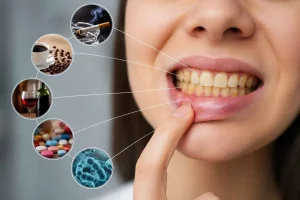
Extrinsic stains are surface-level discolorations that develop mainly on the enamel, the outer layer of your teeth. They are the most common type of tooth staining and are often linked to everyday foods, drinks, and tobacco use. Because these stains remain closer to the enamel surface, professional teeth whitening can usually lighten them very effectively.
Common causes of extrinsic stains include:
- Coffee – frequent coffee drinking can leave brown or yellow surface stains.
- Tea – tea contains compounds that can contribute to noticeable tooth discoloration.
- Red wine – its dark pigments can gradually stain enamel.
- Cola – dark-colored soft drinks may contribute to surface staining.
- Tobacco – smoking and tobacco products can cause persistent yellow or brown stains.
- Berries – highly pigmented berries can leave temporary or gradual discoloration.
- Tomato sauce – its strong pigments may contribute to enamel staining.
- Curry – curry contains natural pigments that can discolor teeth over time.
- Balsamic vinegar – its dark color and acidity can contribute to surface staining.
Intrinsic Stains (Inside the Tooth)
Intrinsic stains are different because the discoloration develops inside the tooth rather than simply sitting on the enamel surface. These stains can involve the dentin beneath the enamel, making them deeper and generally more difficult to remove. Whitening may lighten some intrinsic discoloration, but its effect is often limited and less predictable than it is with extrinsic stains.
Common causes of intrinsic stains include:
- Tetracycline antibiotics – certain antibiotics taken during tooth development can cause lasting discoloration.
- Tooth trauma – an injury can change the color of a tooth from within.
- Excess fluoride or fluorosis – too much fluoride during tooth development can cause white, brown, or mottled discoloration.
- Aging – as enamel naturally becomes thinner, the yellowish dentin underneath can become more visible.
- Previous dental work – certain restorations or dental treatments may leave a tooth looking darker or different in shade.
Age-Related Discoloration
As we get older, teeth naturally change in color. Years of eating and drinking staining foods can create extrinsic discoloration, while gradual enamel thinning allows the naturally yellowish dentin underneath to show through, creating an intrinsic component as well. That’s why age-related tooth discoloration is often a combination of surface staining and changes within the tooth itself.
Which Stains Respond Best to Teeth Whitening?
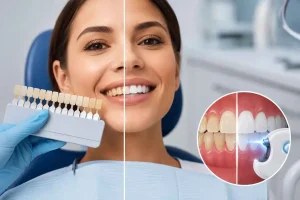
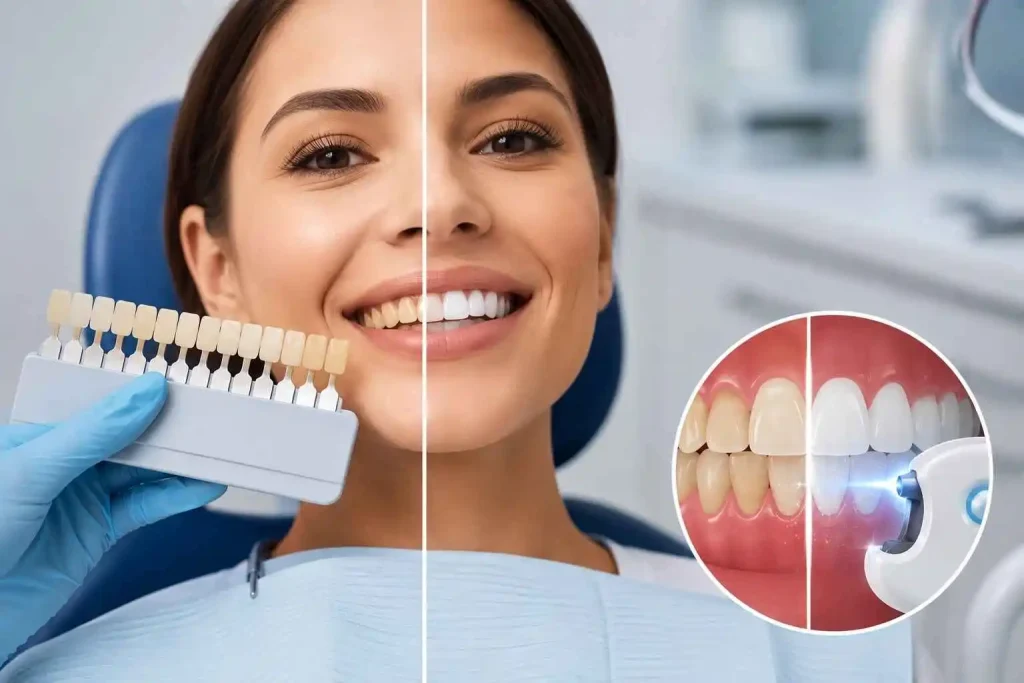
If your teeth have picked up stains from your daily habits, there’s a good chance whitening can make a noticeable difference. Professional teeth whitening tends to work especially well on surface-level discoloration caused by pigmented foods, drinks, and tobacco, helping restore a cleaner, brighter tooth shade.
- Yellow discoloration caused by surface staining
- Coffee stains from regular coffee drinking
- Tea stains from dark pigments and tannins
- Wine stains, particularly from red wine
- Tobacco stains linked to smoking or tobacco use
- Everyday food staining from curry, berries, sauces, and other pigmented foods
Which Stains May Not Respond Well?
Whitening can brighten many types of discoloration, but deeper or internal stains may not respond as strongly. If your tooth color is linked to changes within the dentin, medication, trauma, or fluorosis, professional whitening may have limited results. That doesn’t mean you’re out of options other cosmetic treatments can help improve the appearance of stubborn stains.
- Gray-colored stains that develop deeper within the tooth
- Medication-related staining, including tetracycline discoloration
- Trauma or injury-related discoloration affecting the internal tooth structure
- Severe fluorosis with deeper or pronounced staining
- Long-standing intrinsic stains beneath the enamel
Types of Stains and Whitening Effectiveness
Here’s a quick comparison to help you understand which types of tooth discoloration typically respond best to professional whitening:
Stain Type & Common Causes | Whitening Effectiveness |
Extrinsic stains — coffee, tea, red wine, tobacco, and food staining | Works well — professional whitening is usually highly effective |
Intrinsic stains — medication, tooth trauma, or fluorosis | Limited — deeper discoloration may not fully respond |
Age-related discoloration — enamel thinning and yellow dentin | Partial — whitening may brighten the teeth but may not remove all discoloration |
Gray or severe fluorosis stains — deep or pronounced discoloration | Poor response — alternative cosmetic treatments may provide better results |
Can Crowns, Veneers, or Fillings Be Whitened?
Teeth whitening changes the color of natural tooth enamel, so it won’t lighten dental restorations. If you have crowns, veneers, tooth-colored fillings, or bonding, their existing shade will remain the same after whitening. This can sometimes create a noticeable color difference, but your dentist can discuss replacement or cosmetic options if a better match is needed.
- Dental crowns: Whitening won’t change their existing shade.
- Veneers: Porcelain or composite veneers remain their original color.
- Tooth-colored fillings: Whitening does not lighten the filling material.
- Dental bonding: Composite bonding keeps its existing shade.
- After whitening: Your dentist can assess mismatched restorations and discuss replacement options for a more even smile.
Professional Whitening vs. Over-the-Counter Products
Not every whitening option delivers the same results. Professional teeth whitening is tailored to your teeth and uses stronger whitening agents under dental supervision, while over-the-counter products are generally milder. For surface stains, OTC options may help, but tougher discoloration can be harder to treat evenly without a customized professional approach.
- Professional whitening: Uses stronger, dentist-selected whitening agents.
- Customized treatment: Treatment can be adjusted to your tooth shade and staining.
- Even results: Custom trays or in-office treatment can provide more consistent whitening.
- Safety monitoring: A dentist can monitor sensitivity, gums, and overall oral health.
- OTC strips and gels: Usually contain milder concentrations and may produce less noticeable results.
- Whitening toothpaste: Mainly helps remove surface stains rather than deeper discoloration.
- Tougher stains: OTC products may have limited or uneven results with stubborn staining.
How to Keep Your Smile Brighter Longer
- Use a straw: For coffee, tea, cola, and other staining drinks, a straw can reduce direct contact with your front teeth.
- Wait before brushing: After acidic or staining foods, wait about 30 minutes before brushing to give your enamel time to settle.
- Stay well hydrated: Drinking water throughout the day helps rinse away food pigments and keeps your mouth feeling fresh.
- Book regular cleanings: Routine professional dental cleanings can remove surface buildup and stains that regular brushing may leave behind.
- Avoid tobacco products: Smoking and tobacco can quickly bring back yellow or brown tooth stains, so avoiding them helps protect your whitening results.
Is Teeth Whitening Right for Everyone?
Teeth whitening can be a safe and effective way to brighten your smile, but it isn’t ideal for every situation. A dental evaluation helps determine whether whitening is suitable for you and whether your discoloration is likely to respond. Addressing existing dental problems first can also make the treatment more comfortable and predictable.
- Healthy gums: Your gums should be healthy before starting whitening.
- No untreated cavities: Cavities should be treated first to avoid discomfort during whitening.
- No active gum disease: Existing gum inflammation or periodontal disease needs attention beforehand.
- Suitable discoloration: Surface stains and certain yellow discoloration tend to respond better than deep intrinsic stains.
- Dental evaluation: A dentist can examine your teeth, gums, enamel, and restorations before recommending whitening.
Why Choose BSRV Dental Office for Teeth Whitening
At BSRV Dental Office, we take a personalized approach to teeth whitening, focusing on your oral health, the type of discoloration you have, and the result you’re hoping to achieve.
- Experienced Dental Team: Our dental professionals assess your teeth and staining before recommending the most suitable whitening approach.
- Professionally Supervised: Whitening agents are used with professional guidance to help protect your enamel, gums, and overall oral health.
- Personalized Treatment Plans: Your treatment can be tailored to your stain type, tooth shade, sensitivity, and individual smile goals.
- Convenient Scarborough Care: Located in Scarborough, ON, BSRV Dental Office makes professional teeth whitening convenient for local patients.
Frequently Asked Questions
Can teeth whitening remove all types of stains?
BSRV Dental Office explains that whitening works best on extrinsic stains sitting on the enamel, such as coffee, tea, wine, and tobacco stains. Deeper intrinsic discoloration caused by medication, trauma, or fluorosis may respond only partially and sometimes needs another cosmetic treatment.
What’s the difference between extrinsic and intrinsic stains?
BSRV Dental Office considers the location of the discoloration when assessing whitening. Extrinsic stains develop on the enamel surface, while intrinsic stains occur deeper within the tooth, often involving the dentin, so they can be more difficult to lighten.
Will whitening work on gray or medication-caused stains?
Gray discoloration and stains linked to medications, particularly tetracycline, can be difficult to treat with conventional whitening. BSRV Dental Office can assess the cause and depth of the staining and recommend an appropriate cosmetic option if whitening alone is unlikely to give the desired result.
Can crowns or veneers be whitened along with natural teeth?
No. Teeth whitening affects natural tooth enamel, but it does not change the color of crowns, veneers, tooth-colored fillings, or dental bonding. If your natural teeth become lighter and your restorations no longer match, BSRV Dental Office can discuss replacement options.
How long do professional whitening results last?
Professional teeth whitening results can last for quite some time, but they gradually fade as new stains develop from foods, drinks, tobacco, and normal aging. Good oral hygiene, regular dental cleanings, and occasional touch-up treatment can help maintain a brighter smile.
Will whitening make my teeth sensitive?
Some people experience temporary tooth sensitivity during or shortly after whitening, particularly with stronger bleaching agents. BSRV Dental Office can consider your existing sensitivity and oral health when planning treatment to help make the experience as comfortable as possible.
What if whitening doesn’t work on my stains?
If whitening doesn’t provide the improvement you hoped for, there may still be effective options. BSRV Dental Office can evaluate stubborn intrinsic discoloration and discuss treatments such as dental bonding, veneers, or crowns, depending on the cause and condition of your teeth.
Conclusion
Teeth whitening can make a noticeable difference, especially when extrinsic stains from coffee, tea, tobacco, or food are the main concern. However, intrinsic stains that develop deeper within the tooth may not respond fully to whitening and could require options such as veneers, bonding, or crowns. If you’re unsure what’s causing your discoloration, book a consultation with BSRV Dental Office in Scarborough, ON, to identify the stain type and find the right treatment for your smile.